Code-ready paperwork
You receive a completed test report with the key device details and readings recorded in a format used for compliance records.
Serving Sarasota, Florida & surrounding areas
Mon–Fri 8am–6pm · Sat 9am–2pm
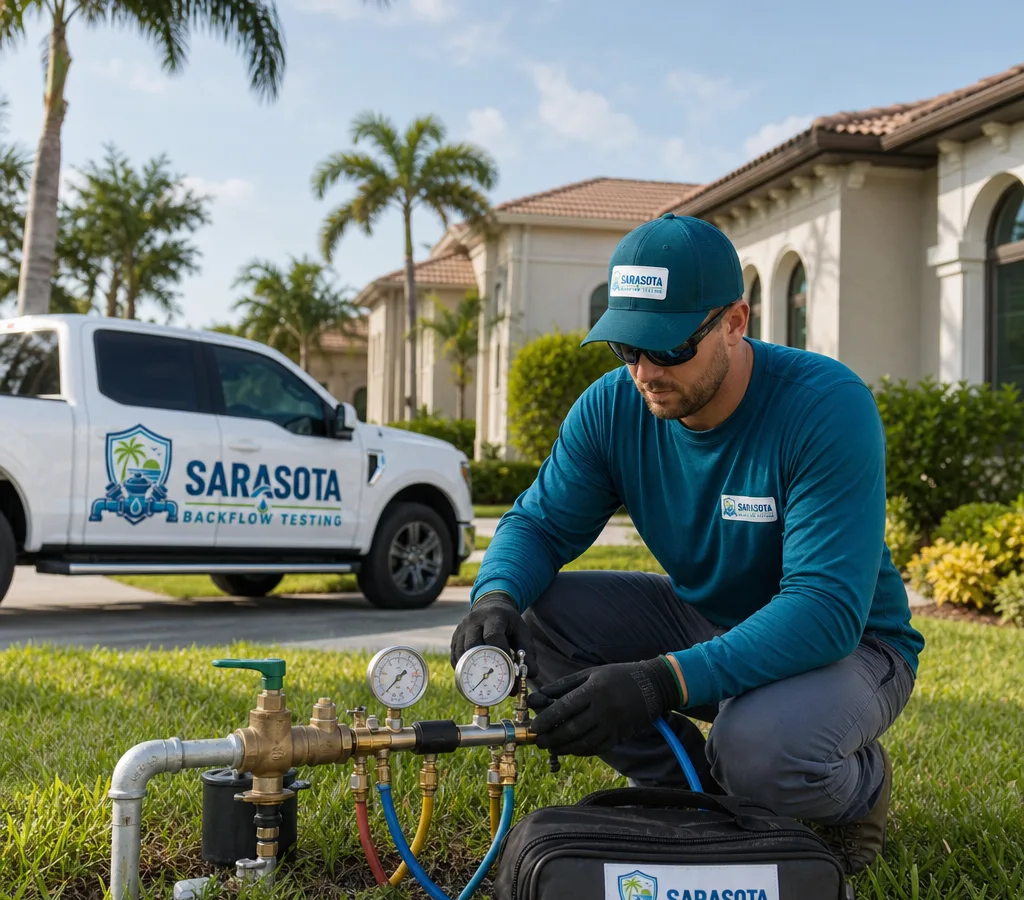
Residential service · Sarasota, Florida
Protect your home's drinking water and keep inspection paperwork simple with certified testing, straightforward scheduling, and code-ready documentation.
Protect the potable water supply
If you searched for residential backflow testing Sarasota, you are likely trying to satisfy a local requirement, complete a home sale, or address a notice tied to an irrigation or fire line connection. Residential backflow testing checks that your backflow prevention assembly is working correctly so contaminated water cannot siphon back into the potable water supply.
At Sarasota Backflow Testing, we focus on residential backflow test appointments that are clean, quick, and well documented. We arrive with the proper calibrated test equipment, verify the device type and accessible test ports, perform the test procedure for the specific assembly, and provide a clear report you can use for compliance records.
Homes around Sarasota often have backflow devices installed on irrigation systems, pool autofill lines, or other cross-connection points where a pressure change could create back-siphonage. When these assemblies are due for testing, the priority is simple: accurate results, a complete report, and a process that does not turn into a half-day interruption.
Prepare for a valid test
Residential backflow testing is performed on testable backflow prevention assemblies, most commonly installed outdoors near the meter, in a valve box, or near irrigation equipment. During the visit we identify the assembly, confirm shutoff valves operate, and run the appropriate test sequence.
Common residential assemblies and terms you may hear:
Before we arrive, it helps if you:
If we find missing test ports, damaged shutoffs, or a device that is not testable, we will explain what is preventing a valid test result and what the next step looks like. We also provide backflow testing throughout Sarasota.
Professional from start to finish
You receive a completed test report with the key device details and readings recorded in a format used for compliance records.
We confirm the device type, location, and access needs before testing so you know what will happen on-site.
Each device has a defined test sequence. We follow the method that matches your assembly so the result is defensible.
We keep water discharge controlled, protect surrounding landscaping where possible, and leave the test area as we found it.
If a device fails, we explain what the readings mean and what typically comes next so you can make a practical decision.
We confirm the address in Sarasota, device location (meter area, irrigation equipment, side yard), and any access notes like gate codes or valve box placement.
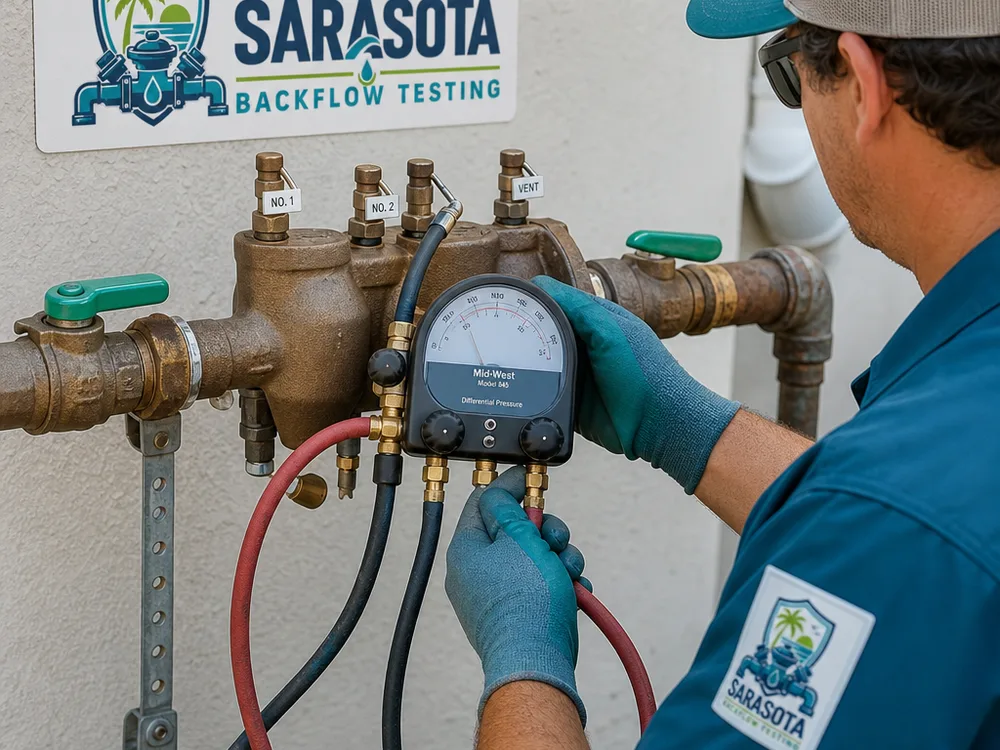
We identify the assembly type and size, inspect visible condition, verify shutoff valves function, and connect calibrated test equipment to the test cocks.
We run the required checks for the assembly, including check valves and relief valve performance where applicable, and record the readings needed for the report.
We provide the completed results and explain pass or fail in plain language so you know whether you are done or need a follow-up plan.
If the assembly does not pass, we outline common causes such as worn check components, debris, or valve issues and explain what a repair or replacement path typically involves.
Typical residential pricing
Residential backflow testing in Sarasota typically runs about $95 to $180 for a single testable device, with higher pricing when access is difficult or when multiple assemblies are tested at the same home. If you have an irrigation backflow plus another testable device, the total is often less than booking separate trips.
Your exact price depends on device type (RP vs DC vs PVB), location (valve box depth, tight clearances), valve condition, and whether time is needed to restore access or isolate zones. Final pricing is confirmed at the appointment once the assembly and site conditions are verified.
Local conditions matter
Sarasota homes vary widely, and that changes how a test appointment goes.
In areas like Laurel Park and Gillespie Park, device access is sometimes affected by dense plantings or older yard layouts. A quick trim and clear working space around the assembly can prevent delays.
In parts of Siesta Key and near Sarasota Bay, equipment is often placed to manage flooding risk and drainage. Devices may be set higher or tucked behind walls and gates, so access details matter when scheduling.
In Lakewood Ranch and other planned developments, devices are commonly placed in standardized irrigation setups. HOA access rules and gate procedures can affect arrival and on-site coordination.
Warm, wet weather can also accelerate exterior corrosion on valves and fittings, especially when assemblies sit in standing water in a valve box. If shutoffs are stiff or the device area is saturated, we take a cautious approach so the test can be completed safely and without breaking aging components.
Check AvailabilityPractical answers
Most residential backflow testing appointments take about 20 to 40 minutes for one accessible, testable assembly. Time can increase if the device is in a deep valve box, if landscaping blocks access, or if shutoff valves are stiff and require careful operation to avoid damage.
You usually only need to be home if the assembly is inside a locked area, behind a gate, or if water needs to be shut off inside the home to isolate the device. If the device is fully accessible outdoors and we have clear access instructions, many homeowners choose to be away during the visit.
If it fails, the test report will show which checks did not meet requirements, and the next step is typically repair or replacement depending on the device condition and parts availability. Common causes include worn check assemblies, debris preventing a tight seal, or valve issues from age and corrosion in outdoor installations.
Yes, irrigation backflow assemblies are among the most common residential devices we test, including PVB and RP styles depending on what is installed. The key requirement is that the device is testable and accessible, with working shutoffs and usable test ports.
Residential backflow testing is commonly required when a property has a testable backflow prevention assembly installed on a line that could create a cross-connection risk, such as irrigation or certain auxiliary water connections. The purpose is to document that the assembly is operating correctly and protecting the potable water supply.
Clear access to the assembly, unlock any gates, and locate any irrigation shutoffs that might be needed. If the device is in a valve box, removing standing debris or covering material around the lid helps, and letting us know about tight access or flooding in the box helps the appointment go smoothly.
Yes, you will receive a completed test report documenting the device identification details and test readings. Keep it with your home records, especially if you have irrigation equipment, are planning renovations that affect plumbing connections, or anticipate a home sale.
Clear testing, practical documentation
Tell us where the device is located and what it serves (irrigation, pool autofill, or another connection). We will confirm access needs, complete the test, and provide clear documentation for your Sarasota home.